In the face of increasing cyberthreats, securing digital access is a necessity. Today, multi-factor authentication (MFA) is one of the most effective ways of strengthening the protection of online accounts. This article details the principles of MFA, its importance and the most secure solutions for adopting it.
Definition and principles of multi-factor authentication (MFA)
Multi-factor authentication is based on the use of several verification elements to confirm a user's identity. Unlike conventional password-based authentication, MFA adds one or more layers of security, considerably reducing the risk of unauthorized access.
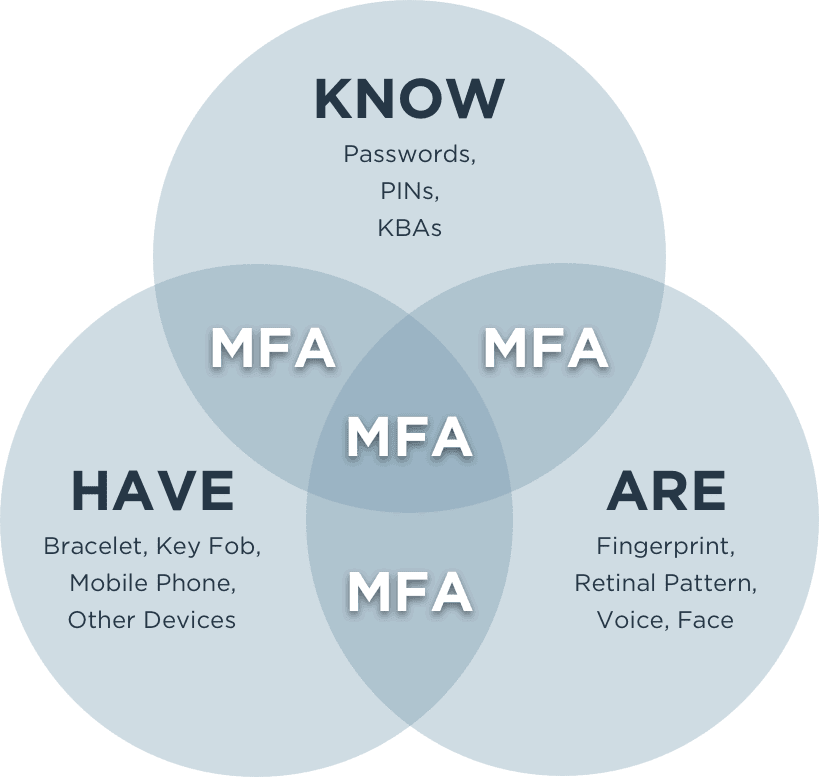
Authentication factors fall into three main categories: - Knowledge factor: a password or PIN code. - Possession factor: a smartphone, an authentication application (Google Authenticator, Microsoft Authenticator) or a security key (YubiKey). - Biometric factor: fingerprint, facial or voice recognition.
The combined use of at least two of these factors enables MFA to be activated, increasing the security of online accounts.
The importance of multi-factor authentication
Passwords are still a commonly used authentication method, but they present significant vulnerabilities: - 66% of users reuse their passwords on multiple platforms. - More than 15 billion compromised credentials were circulating on the dark web in 2023. - 20% of users are victims of phishing (source: Verizon).
MFA significantly reduces these risks. A Microsoft study shows that 99.9% of automated attacks are stopped using this method. In addition, Google reports that MFA users are 10 times less likely to be hacked.
The limits of SMS MFA
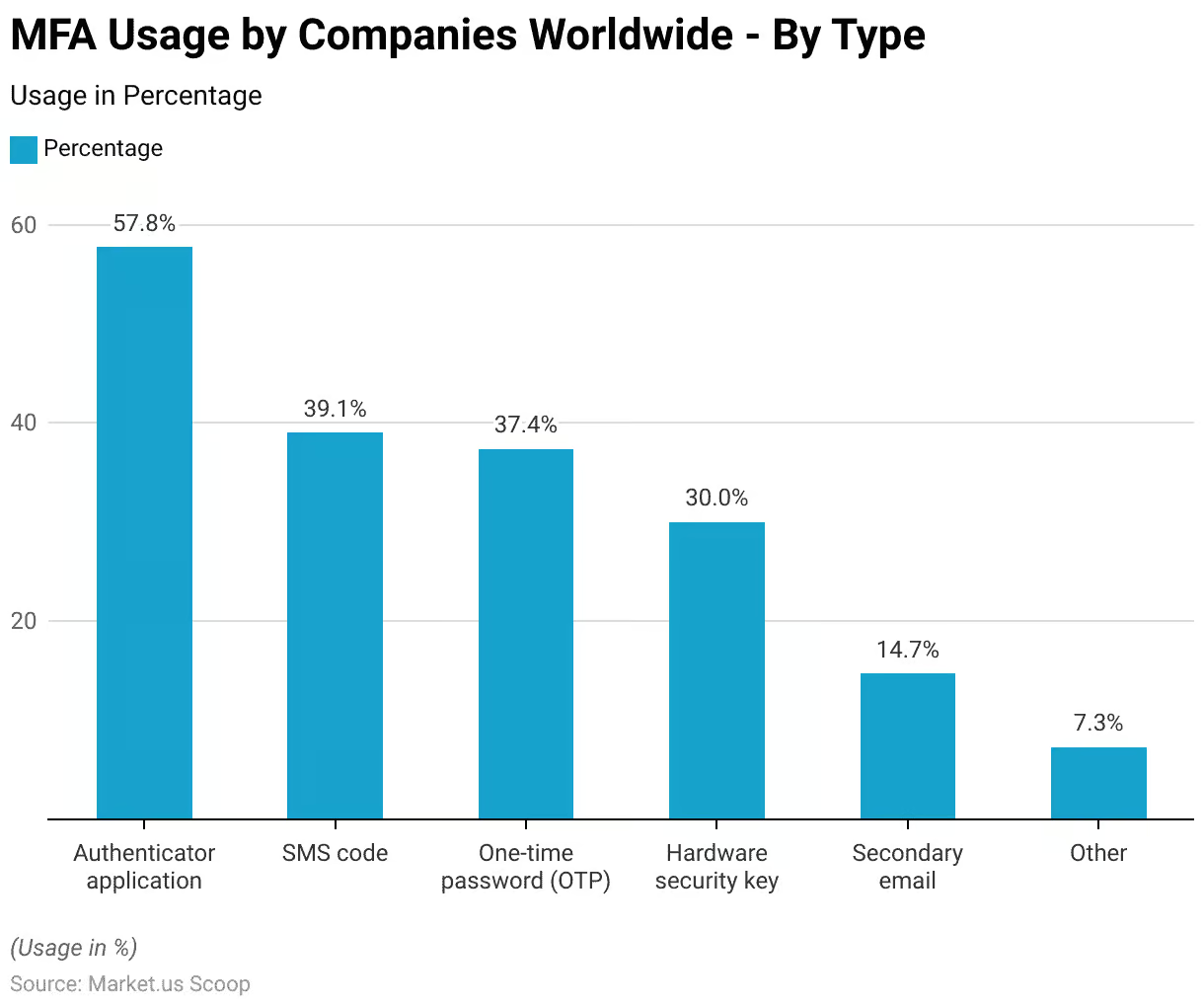
Many users receive their authentication codes by SMS. However, this method has its own security flaws, notably through the SIM Swapping technique.
!mfa-usage-by-companies-worldwide-by-type.avif
SIM Swapping: a growing threat
SIM Swapping consists in usurping a user's identity from his or her telephone operator and transferring his or her telephone number to a new SIM card controlled by an attacker. This method enables cybercriminals to receive authentication codes sent by SMS and take control of their victims' accounts.
SIM Swapping attacks are not limited to individuals. In 2019, Twitter CEO Jack Dorsey had his account compromised by this technique, enabling attackers to publish malicious messages without his knowledge.
Recommendations for reinforced authentication
To avoid the risks associated with SMS, we recommend opting for more secure solutions: - Authentication applications (Google Authenticator, Microsoft Authenticator), which generate temporary codes independently of the mobile network. - Physical security keys (YubiKey, Titan Security Key), offering advanced protection against phishing and ID theft.
For users handling sensitive data, the use of security USB keys with biometric verification is highly recommended. These devices combine the possession of a physical element with additional identity verification, reinforcing protection in the event of loss or theft.
Security and insurance: a complementary approach
At Dattak, MFA activation is an essential criterion in assessing cyber risks. A company adopting advanced security measures benefits from better protection against cyber-attacks, and can thus optimize its insurance coverage.
Adopting multi-factor authentication is an essential step in ensuring the security of personal and business data. In the face of increasingly sophisticated threats, it is imperative to integrate robust solutions to protect digital access.
Dattak remains committed to supporting companies in their drive towards enhanced cybersecurity. Cyber risk is the number 1 risk for any company, whatever its size.