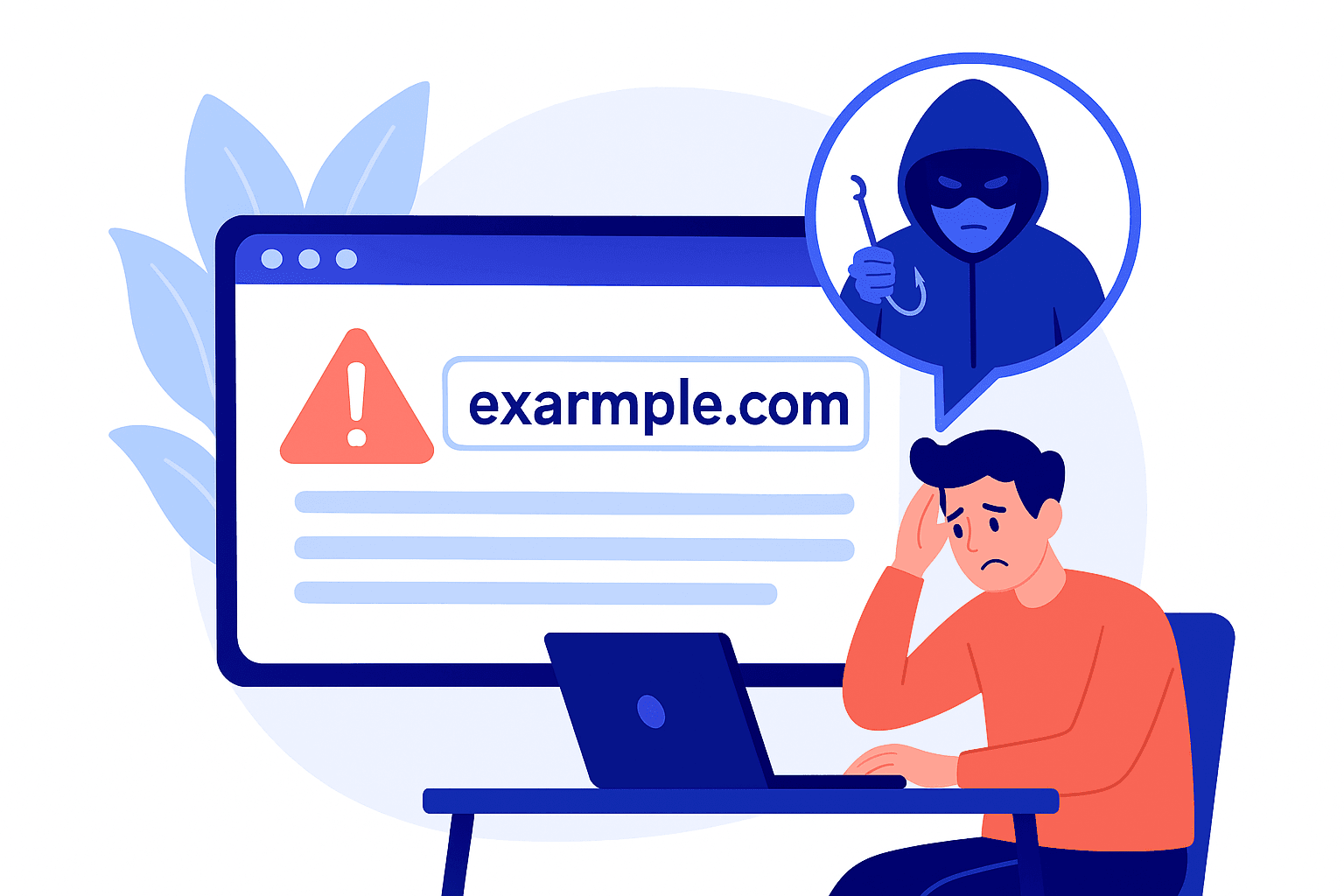
A threat invisible at first glance
In today's fast-paced world, all it takes is a moment's carelessness to get caught out. A typo in the address bar, and you're redirected to a malicious site. This phenomenon, known as typosquatting, is one of the most devious yet effective cybercrime techniques.
What is typosquatting?
Typosquatting (or hijacking domain names by typing mistakes) involves registering domains very similar to those of well-known sites, with the aim of exploiting Internet users' mistakes. The trap is simple: you type "gooogle.com" instead of "google.com", and you land on a fake site designed to steal your data.
This method is used to :
- Stealing credentials via fake login forms;
- Spread malware (ransomware, keyloggers, etc.);
- Carry out financial scams via fake stores or fraudulent customer support;
- Damage a brand'sreputation by distributing malicious content from a nearby domain.
The most common techniques
Cybercriminals compete in ingenuity to register deceptive domains. Here are a few common methods:
- Simple typos: `amazzon.com`, `googgle.fr`, `dattak.ioo`.
- Change of extension: `.net` or `.org` instead of `.com`.
- Similar characters: `rnicrosoft.com` instead of `microsoft.com` (the "r" and "n" forming an "m")
- Addition of misleading words: `facebook-login.com`, `paypal-verification.net`.
Once on these pages, the surfer is greeted by a site cloned identically to the real thing, but designed to trick.
Why is this threat so dangerous?
Typosquatting relies on human attention. In a busy professional or personal environment, it's very easy to be tricked. The danger is twofold:
- For individuals: data theft, identity theft, computer infection.
- For companies: loss of customer confidence, compromised information systems, legal risks, damage to brand image.
The consequences can be immediate and costly, both financially and in terms of reputation.
How can you protect yourself effectively?
A few good practices can greatly reduce the risks associated with typosquatting:
- Always check the URL before entering identifiers, especially for sensitive services (banks, professional e-mail...).
- Use a password manager, which will only automatically fill in your credentials on legitimate sites.
- Never click on a link without first hovering over it to check where it leads.
- Activate in-houseDNS filtering or malicious link analysissolutions.
- For companies: register the main variants of their domain name (frequent errors, common extensions) to prevent them from being exploited.
Vigilance as the first line of defense
Typosquatting is a threat as simple as it is effective. And that's precisely what makes it so dangerous. It plays on human reflexes and aims to divert the trust we have in certain sites and brands.
Fortunately, this threat can be contained by increased vigilance, adapted tools and ongoing user awareness.
---
This article is based on the Dattak Decode episode on typosquatting. Watch the full video on our YouTube channel. Cyber risk is the number 1 risk for any company, whatever its size.